

research
Here, we keep you up to date on the latest research findings and current developments.
R&D collaboration project with the Institute for Multiphase Processes at Leibniz University Hannover
As part of the “Central Innovation Program for Small and Medium-Sized Enterprises (ZIM)” – project type: R&D collaboration project – an integrated system is being developed for the safe transport of dendritic cells for autologous immunotherapy in veterinary medicine.
It is based on optimized biological conditions and a technically monitored transport system. The entire system will then be validated under simulated and real-world conditions over a transport period of at least 48 hours.
This Project is supported by the Federal Ministry for Economic Affairs and Energy (BMWE) on the basis of a decision by the German Bundestag.
Research project with the Hannover University of Veterinary Medicine Foundation, Clinic for Small Animals
PetBioCell is collaborating with the Hannover University of Veterinary Medicine Foundation (TiHo) on a research project aimed at developing new immunomodulatory therapeutic approaches for dogs. The project focuses on investigating the use of autologous antigen-presenting cells (tDCs) as an innovative treatment option..
The goal of the project is to gain new scientific insights into immunotherapy for dogs and thereby expand veterinary treatment options in the long term.
The project is funded as part of the “Europe for Lower Saxony” program and supported by funds from the European Social Fund Plus (ESF+) and the European Regional Development Fund (ERDF).

Our Partners
Wissenschaftliche Konferenzen
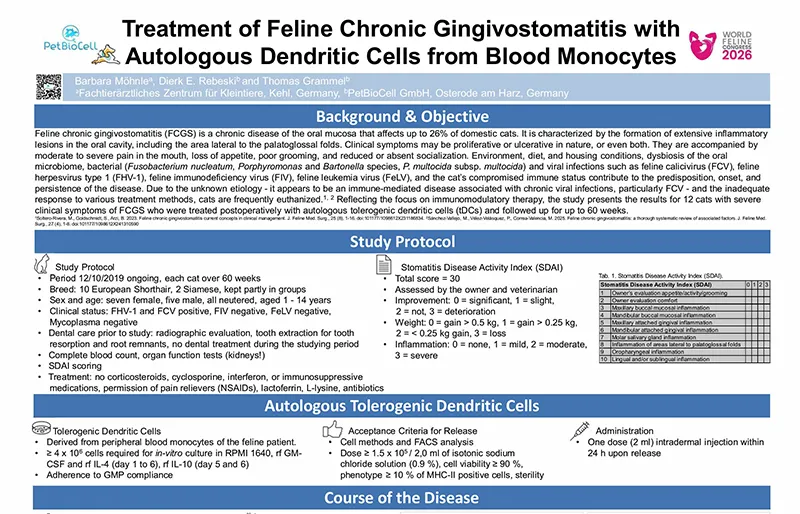
PetBioCell will present the following poster at the 2026 iCatCare World Feline Congress in Wales, UK, June 26 – 28, 2026.
Treatment of Feline Chronic Gingivostomatitis with Autologous Dendritic Cells from Blood Monocytes
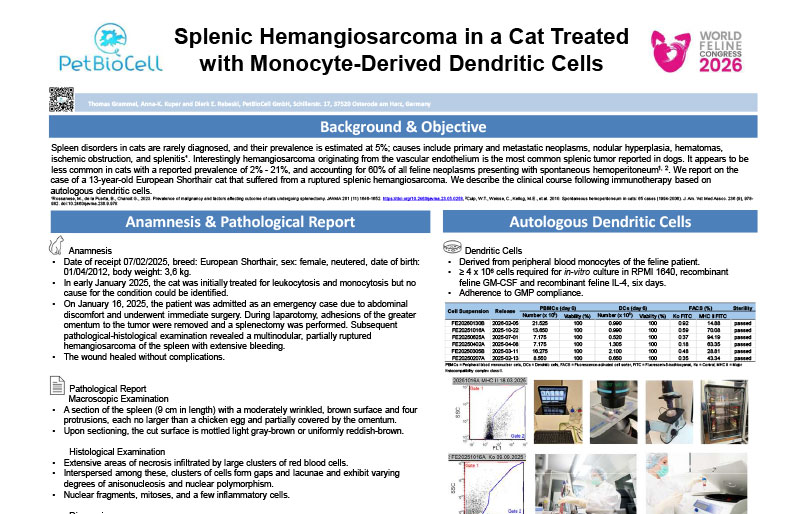
PetBioCell will present the following poster at the 2026 iCatCare World Feline Congress in Wales, UK, June 26 – 28, 2026.
Splenic Hemangiosarcoma in a Cat Treated with Monocyte-Derived Dendritic Cells
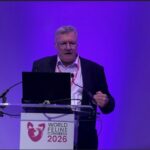
Kleiner Rückblick auf den World Feline Congress 2026 in Newport/Wales
Wir sind stolz, dass wir zwei Poster über unsere Arbeit bei PetBioCell präsentieren konnten:
Behandlung eines Hämangiosarkoms der Milz bei einer Katze und die erfolgreiche Behandlung der chronischen Gingivostomatitis der Katze mit dendritischen Zellen
Zum Thema der Gingivostomatitis durfte Dr. Thomas Grammel einen Vortrag auf dem Kongress halten. Sowohl der Vortrag als auch das Poster wurden von vielen Kongressteilnehmern als sehr interessant für die tägliche Arbeit empfunden. Besonders die einfache Behandlungsmöglichkeit und die sehr positiven Erfahrungen fanden grossen Anklang.
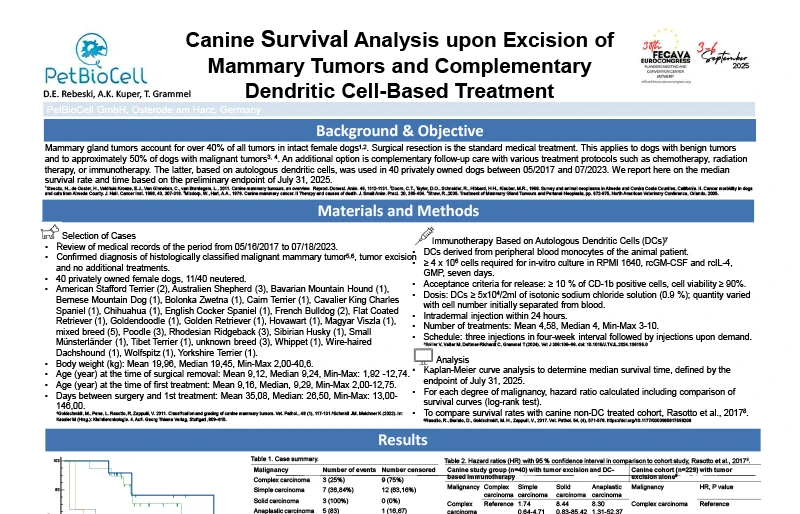
PetBioCell will present the following poster at the 30th FECAVA Eurocongress, Antwerp, BE, September 3 – 6, 2025:
Canine survival analysis following excision of mammary tumors and complementary dendritic cell-based immunotherapy
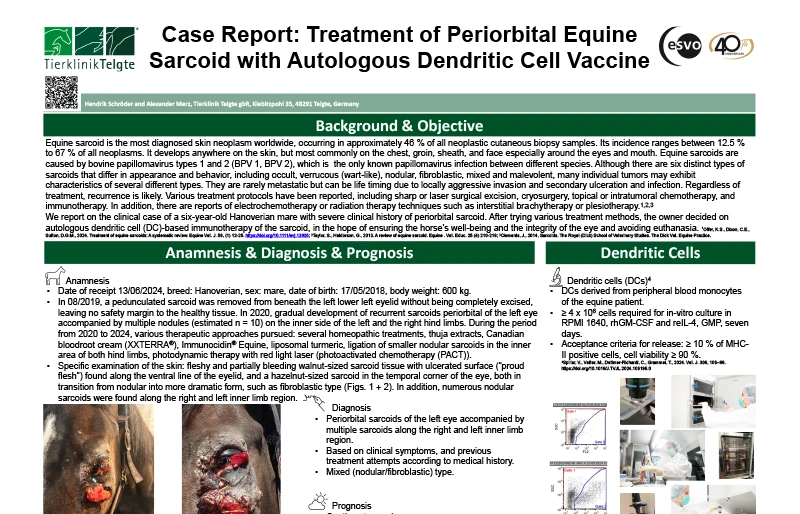
The Telgte Veterinary Clinic will present a case report on cellular immunotherapy for sarcoid in horses at the European Society of Veterinary Ophthalmology (ESVO) conference in Ghent, BE, October 2 – 5, 2025.
Case Report: Treatment of Periorbital Sarcoid in Horses with an Autologous Dendritic Cell Vaccine
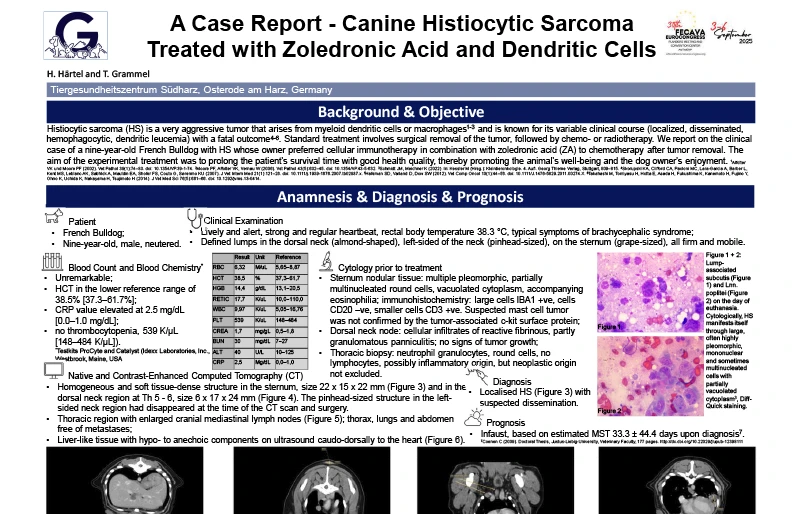
The Südharz Animal Health Center and PetBioCell will jointly present a case study titled A Case Report – Canine Histiocytic Sarcoma Treated with Zoledronic Acid and Dendritic Cells
at the 30th FECAVA Eurocongress in Antwerp, BE, September 3 – 6, 2025
Table of Contents for Publications
We have been conducting research and working on dendritic cell therapy for over 20 years.
Here you will find an overview of the relevant publications from this period.
Schroeder, H., Merz, A. (2025). Case report: treatment of periorbital equine sarcoid with autologous dendritic cell vaccine. European Society of Veterinary Ophatalmology (ESVO), October 02 – 05 2025, Ghent, BE.
Rebeski, D.E., Kuper, A.K., Grammel, T. (2025). Canine survival analysis upon excision of mammary tumours and complementary dendritic cell-based immunotherapy, 30th FECAVA Eurocongress, September 03-06 2025, Antwerp, BE.
Härtel, H., Grammel, T. (2025). A Case report – canine histiocytic sarcoma treated with zoledronic acid and dendritic cells. 30th FECAVA Eurocongress, September 03-06 2025, Antwerp, BE.
Grammel, T., Möhnle, B., Dettmer-Richardt, C., Rebeski, D.E. (2025). Autologe Immuntherapie der felinen chronischen Gingivostomatitis (FCGS) durch toleranzinduzierende dendritische Zellen. Webinar, 29.10.2025, PetBioCell GmbH, Osterode, DE.
Spiller, V., Vetter, M., Grammel, T. (2024). Canine splenic hemangiosarcoma treated by autologous monocyte-derived dendritic cell therapy. VCS Annual Congress, October 16 – 19, Orlando, Fl, USA.
Spiller, V., Vetter, M., Dettmer-Richardt, C., Grammel, T. (2024). Prospective study of successful autologous dendritic cell therapy in dogs with splenic stage II hemangiosarcoma. The Veterinary Journal 306 (2024) 106196, https://doi.org/10.1016/j.tvjl.2024.106196.
Chen, H. (2024). Erstellung einer Datenbank zur Dokumentation und Analyse der Kryokonservierungsverfahren von Zellsuspensionen. Masterarbeit, Leibniz Universität Hannover, Institut für Mehrphasenprozesse, Garbsen.
Grammel, Z.M., Hawacker, T., Grammel, T. (2023). A Pilot, uncontrolled study of postsurgical treatment with monocyte-derived autologous dendritic cells in 19 dogs with mast cell tumour. WSAVA Congress, September 27 – 29 2023, Lisbon, PT.
Deeb, T., Schwebel, F., Rittinghaus, T., Glasmacher, B. (2023). The Effect of Varying Thawing Temperatures and Preserving Conditions on the Recovery Rate of Cryopreserved Equine Dendritic Cells. In: Probl. Cryobiol. Cryomed. 33 (4), S. 283. DOI: 10.15407/cryo33.04.283.
Deeb, T., Schwebel, F., Rittinghaus, T., Glasmacher, B. (2023). Cryopreservation of equine monocyte derived dendritic cells and the effect of varying thawing temperatures and preserving conditions. Abstracts: 59th Annual Meeting of the Society for Low Temperature Biology. In:CryoLetters 45 (1), 388-419 (2024), S. 408.
Mehr Veröffentlichungen anzeigen
Grosser, G. (2023). Evaluierung von stark eutektischen Lösungsmitteln als Kryoprotektiva für die Kryokonservierung von equinen dendritischen Zellen. Studienarbeit, Leibniz Universität Hannover, Institut für Mehrphasenprozesse, Garbsen.
Möhnle B. (2022): Treatment of feline chronic gingivostomatitis with tolerance-inducing dendritic cells. Presentation, AAFP Conference October 27 – 30, 2022, David L. Lawrence Convention Center, Pittsburgh, USA.
Möhnle, B. (2022). Toleranzinduzierende Zelltherapie bei Gingivostomatitis, Vortrag, 18. Jahrestagung der DVG-Fachgruppe für Zahnkrankheiten.
Grammel, Z.M., Schröder, H. (2022). Postoperative autologous dendritic cell therapy as a treatment option for longevity in canine apendicular osteosarcoma. Poster, 27th FECAVA Conference, June 9 – 12 2022, Prague, CZ.
Grammel, Z.M. (2022). Monocyte-derived dendritic cell therapy following amputation in canine patients with appendicular osteosarcomas. Abstract, VCS Mid-Year Conference, April 10 2022, Puerto Vallarta, MX.
Deeb, T., Zeh, L., Rittinghaus, T., Dettmer-Richardt, C., Grammel, S., Glasmacher, B. (2022). Cryopreservation of dendritic cells for cancer therapy. In: Probl. Cryobiol. Cryomed. 32 (4), S. 300. DOI: 10.15407/cryo32.04.300a.
Deeb, T. (2021). Die Kryokonservierung von dendritischen Zellen. Masterarbeit, Leibniz Universität Hannover, Institut für Mehrphasenprozesse, Garbsen.
Dolphopiatenko, H. (2021). Charakterisierung von Gefrierschutzlösungen für die Kryokonservierung dendritischer Zellen. Studienarbeit, Leibniz Universität Hannover, Institut für Mehrphasenprozesse, Garbsen.
Scherhag, T. K. (2021). Literaturrecherche zur Kryokonservierung und Vitalitätsuntersuchung von dendritischen Zellen. Bachelorarbeit, Leibniz Universität Hannover, Institut für Mehrphasenprozesse, Garbsen.
Pantke, P., Söhl, K. O., Schwittlick, U., Grammel, Z.M. (2021). Chirurgische Resektion und adjuvante dendritische Zelltherapie eines nasopharyngealen Mastzelltumors bei einem Schäferhund. Kleintierpraxis 66, Heft 08/2021, S. 456-464.
Hawacker, T., Thiel, C., Herkommer, l., Kramer, M., Grammel, T., Grammel, L. (2020). Otitis externa und media durch ein Ceruminaldrüsenkarzinom bei einem Flat Coated Retriever. Prakt. Tierarzt 101, 08/2020, S. 740-749.
Penner, K., Hawacker, T., Grammel, T. (2019). Immunologic treatment of intraocular melanoma after enucleation to avoid metastatic melanoma. ESVO Meeting, October 3 – 6 2019, Dun Laoghaire, Dublin, IR.
Müller, B., Grammel, M., Grammel, T. (2019). Treatment of a recurring corneal hemangiosarcoma in a horse with a combined photodynamic diode laser therapy and a dendritic cell therapy, ESVO Meeting, October 3 – 6 2019, Dun Laoghaire, Dublin, IR.
Grammel, T., Hawacker, T., Hettling, H., Grammel, S. (2019). Quality of life of dogs during immunologic treatment with monocyte-derived dendritic cells. 25th FECAVA EuroCongress, September 2019, St. Petersburg, RU.
Grammel, T. (2017). A Pilot uncontrolled study of postsurgical treatment with autologous dendritic cell-based immunologic therapy in 17 dogs with mammary adenocarcinoma. Poster, 23rd FECAVA Conference, September 25 – 28 2017, Copenhagen, DK.
Arnold, C., Dreher, I., Grammel, T., Schusser, G.F. (2017). Immunotherapy of a squamous cell carcinoma in the perianal region using autologous dendritic cells in a horse, Equ. Vet. Edu., Vol. 30, 11, pp. 576-582.
Pötzsch, E. (2016). Immunologische Behandlung des caninen Hämangiosarkoms der Milz. Jahrestagung des Arbeitkreises Vakzine der DGfI, 07. 11. 2016, Göttingen, DE.
Hawacker, T. (2016). Tumortherapie mit autologen dendritischen Zellen. Berner Fortbildung Onkologie: Innovative Ansätze und Arbeitsschutz, 7. 12. 2016, Hamburg, DE.
Grammel, T. (2016). Plattenepithelkarzinom – Immunologische Behandlung beim Pferd, Hund Katze Pferd 06/2016, S. 24-27.
Grammel, T. (2016). Tumortherapie mit autologen dendritischen Zellen, Berner Fortbildung Onkologie: Innovative Ansätze und Arbeitsschutz, 12. 10. 2016, Hamburg, DE.
Grammel, S. (2016). PetBioCell – Vom Praxislabor zum Spezialanbieter für die Tumorbehandlung mit dendritischen Zellen, WdT News, 2, S. 11-13.
Grammel, T. (2016). A Pilot uncontrolled study of postsurgical treatment with autologous dendritic cell-based immunologic therapy in 10 dogs with splenic hemangiosarcoma. Presentation. 3rd World Veterinary Cancer Congress, May 25-29 2016, Foz do Iguassu, BR.
Arnold, C., Dettmer-Richardt, C. (2016). Therapie eines Plattenepithelkarzinoms der Haut – moderne Behandlungsansätze, Vortrag, Leipziger Tierärztetag, 16. 01. 2016, Leipzig, DE.
Grammel, T., Dettmer-Richardt, C., Grammel, M. (2015). Immuntherapie bei einer Perianalfistel – Ein Fallbericht. Kleintierpraxis 60, Heft 8, S. 414–423.
Grammel, T. (2015). Immediate immunologic treatment following cytoreduction in fibrosarcoma of cats. Poster, VCS conference, Tysons, VA, USA.
Grammel, T. (2015). Quality of life of cancer patients treated with dendritic cell therapy. Presentation, World Veterinary Congress, Istanbul, TR.
Grammel, T. (2015). Immunologic therapy with monocyte‐derived dendritic cells in canine liposarcoma. Presentation, World Veterinary Congress, Istanbul, TR.
Grammel, T. (2015). A pilot uncontrolled study of postsurgical treatment with autologous dendritic cell-based immunologic therapy in 20 cats with fibrosarcoma. Poster, ISFM Congress, Porto, PT.
Dreher, I. (2015). Immunologic treatment with dendritic cells in equine squamous cell carcinoma. Presentation, World Veterinary Congress, Istanbul, TR.
Grammel, T. (2014). Prime time for autologous dendritic cell vaccines. Poster, Veterinary Cancer Society, Mid-Year Conference, Asheville, NC, USA.
Grammel, T. (2014). From rural veterinary practice to specialized immunological laboratory. Presentation, American Animal Hospital Association, Nashville, TN, USA.
Grammel, T. (2014). Canine melanoma treated with autologous dendritic cell-based vaccines in 10 dogs. Presentation, ESVONC Congress, Vienna, AT.
Grammel, T., Dettmer-Richardt, C. (2013). Dendritische Zellen in der Tumortherapie, Hund Katze Pferd, 8, S. 12-14.
Grammel, T. (2013). Post-surgical treatment with monocyte-derived dendritic cell vaccines in dogs and cats. Presentation, 1st World Veterinary Congress, September 17-20, Prague, CZ.
Grammel, T. (2012). Don’t hesitate to vaccinate immunotherapy with dendritic cells – 2 case studies. Poster, Veterinary Society of Surgical Oncology, May 24-25 2012, Fort Collins, Colorado, USA.
Grammel, T., Müller, E. (2007). Immuntherapie bei Tieren mit dendritischen Zellen, Poster, SVK Jahrestagung, Montreux, CH.
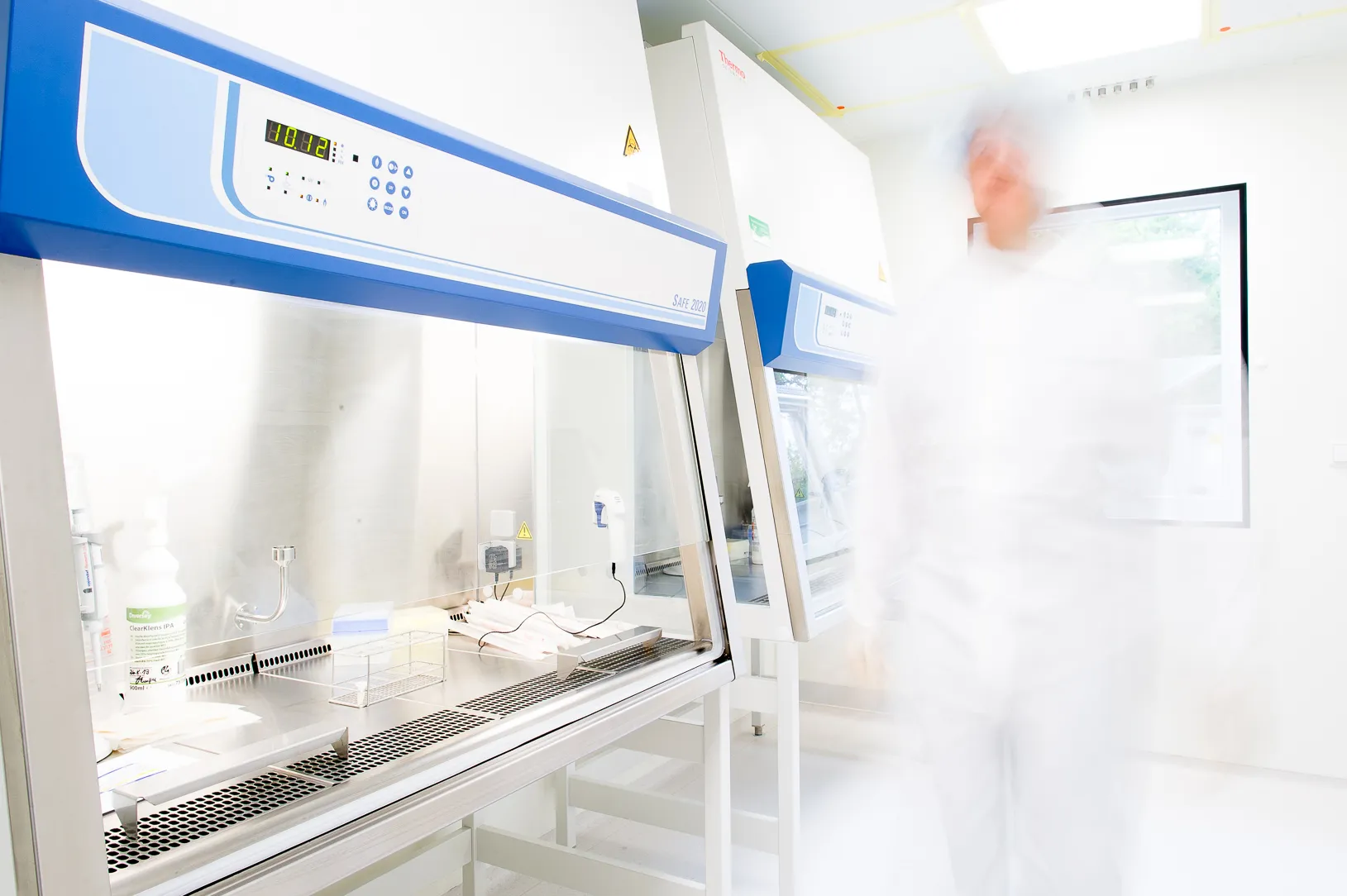
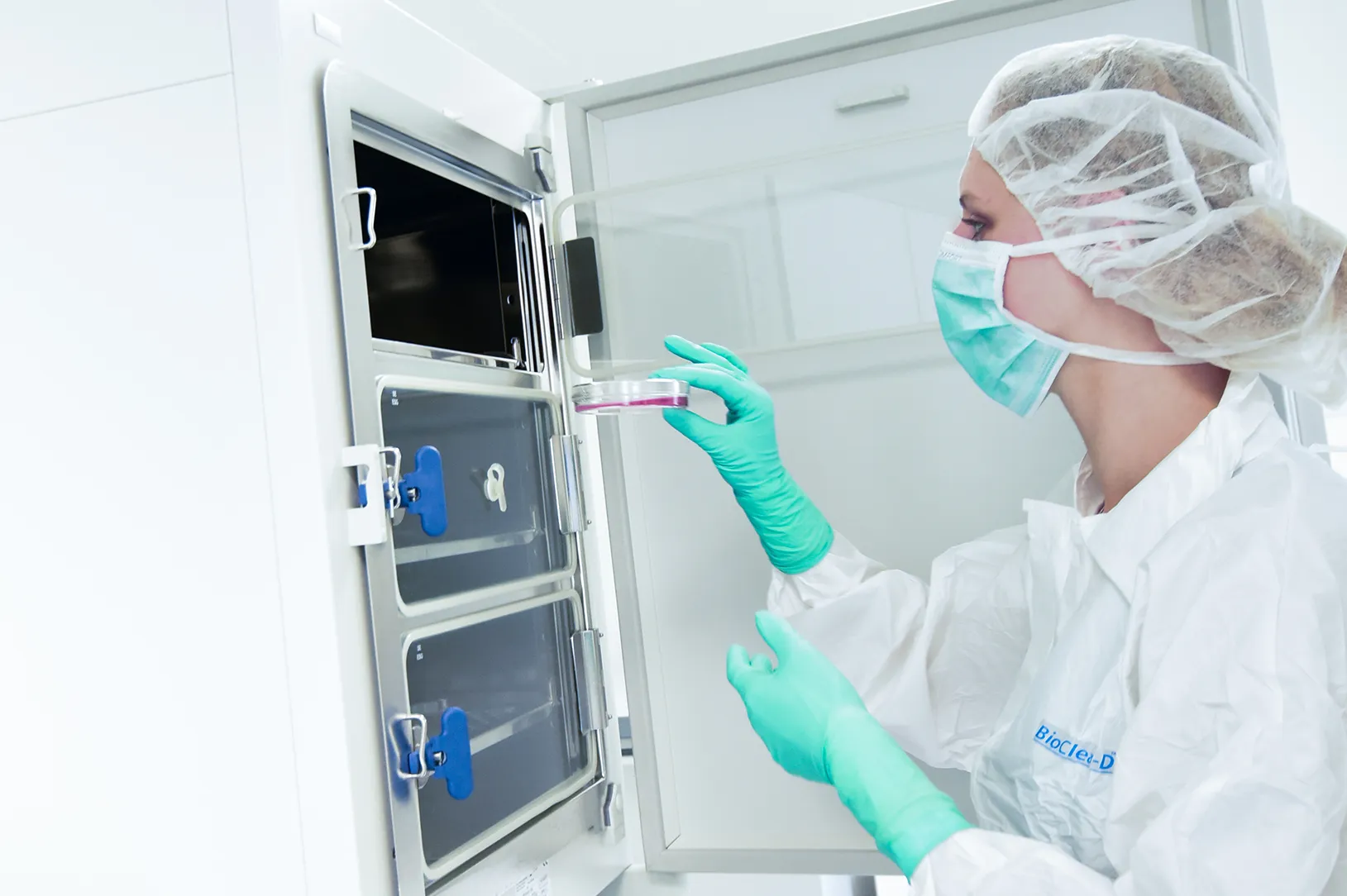
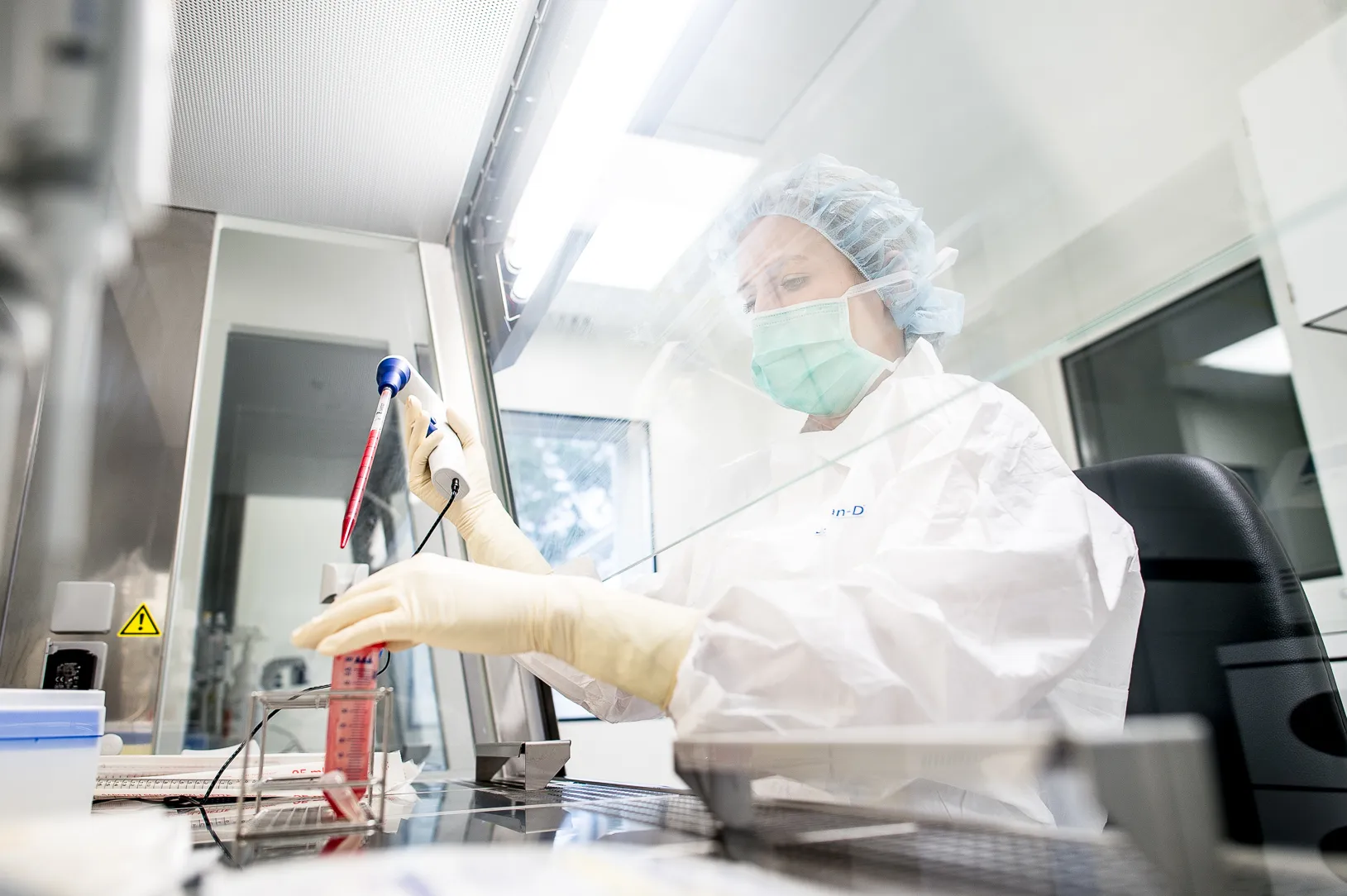
Our Cleanroom Laboratory
In our specialized cleanroom laboratory, we produce autologous cell suspensions tailored to each individual patient. The patient’s own cells are carefully processed under controlled laboratory conditions and prepared for therapeutic use. Through structured preparation processes and coordinated logistics, we ensure that the finished cell suspensions arrive at the treating veterinary practice within 24 hours and can be administered there promptly. In this way, we combine modern cell therapy with fast and practical care for animal patients.
Do you have any questions?
Write to us
You still have more questions
We would be happy to advise you personally regarding your specific patient. Please feel free to call us during our business hours between 8:30 a.m. and 5:00 p.m. or contact us via email at any time.